A Trip to the Azores: Part Two
During our week in the Azores, we took two all-day tours out to the eastern side of San Miguel Island. They were with two different companies, but had some overlap, so I will run them both together in this section. Just in case you think we did all these things in one day. We’re not that heroic.
From our first impressions, San Miguel Island in December is very much a cross between Hawaii and Ireland. Hawaii, because it’s green and lush in the way that is typical for a volcanic island. Ireland, because … well, also because it’s green and lush. But with low stone fences and craggy coastline, and farm animals everywhere. The rich volcanic soil created a lucrative orange industry in the 19th century, and England was their best customer. If you ever wondered where Brits got their taste for orange juice or why they eat marmalade it was probably here. The story we heard … when I say this it’s most likely a story one of the guides told us … the story goes that in the early 20th century someone brought two lemon trees to San Miguel. They had a hidden insect infestation, and there went the orange groves. They’ve made a bit of a comeback, we certainly saw orange trees there.
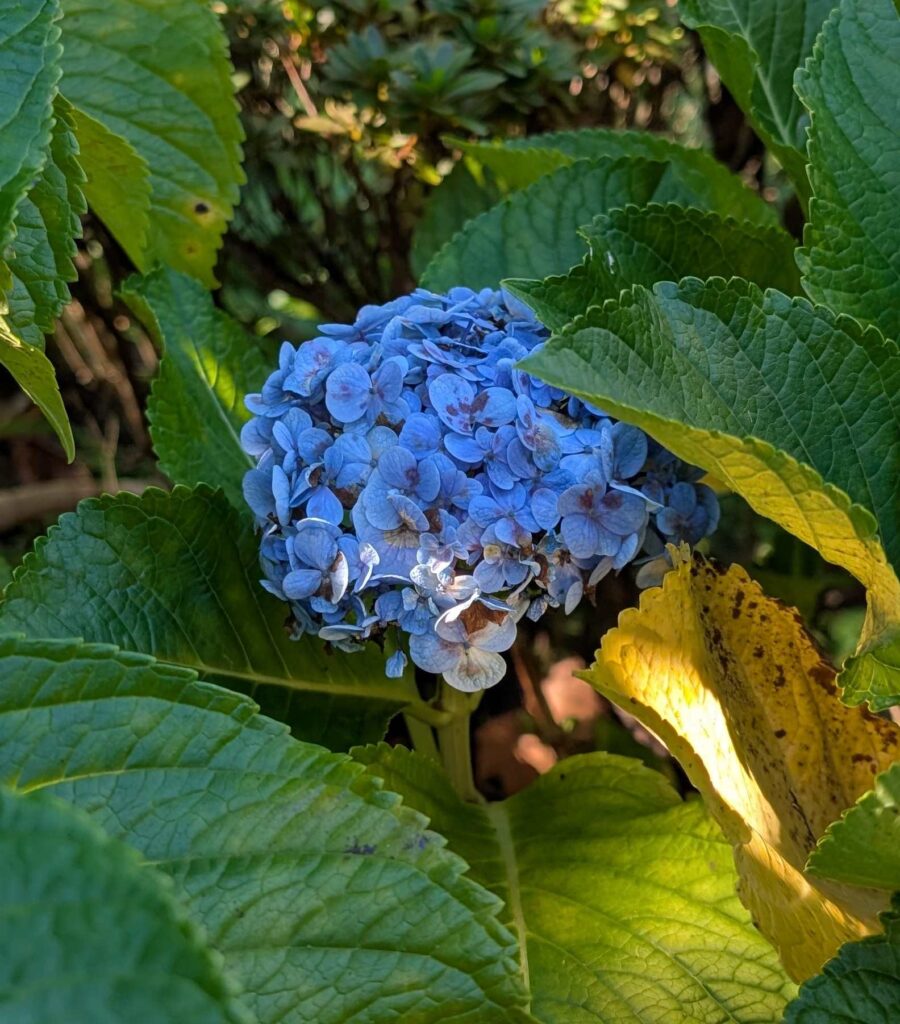
The soil makes its mark in other ways, too: hydrangeas border the roads everywhere, still in bloom in December. Makes me want to come back during the actual flower season! And I’ve never seen such blue hydrangeas before, a clue to how alkaline the soil is. Back in Bremerton, I had a beautiful hydrangea bush outside my bedroom window, but those blossoms were pinkish-blue.
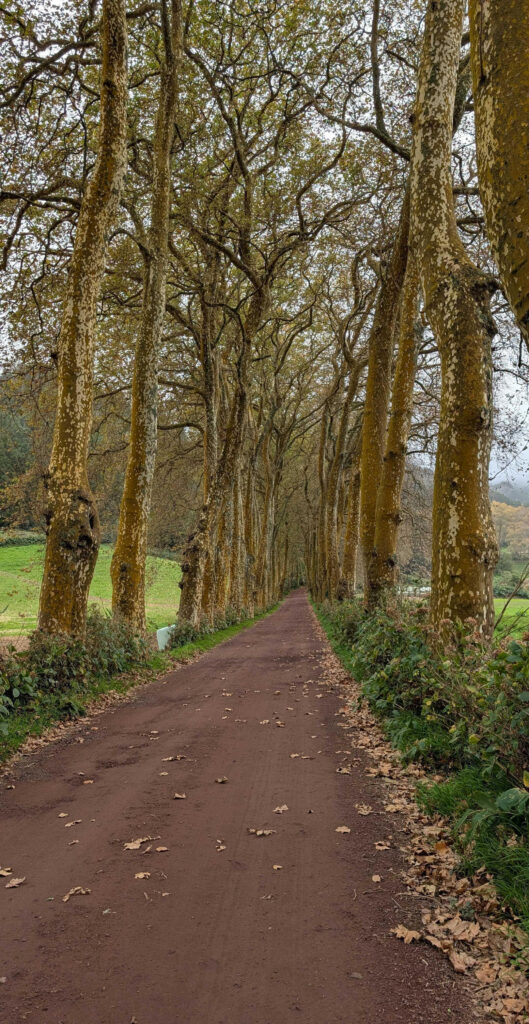
Sycamore lane
The highlight and central attraction of both tours was the town and lagoon of Furnas. This has to be one of very few towns in the world that is located inside an active volcano caldera. The lagoon is stunning, and yet there are trees coated in sulphur to remind you where you are:
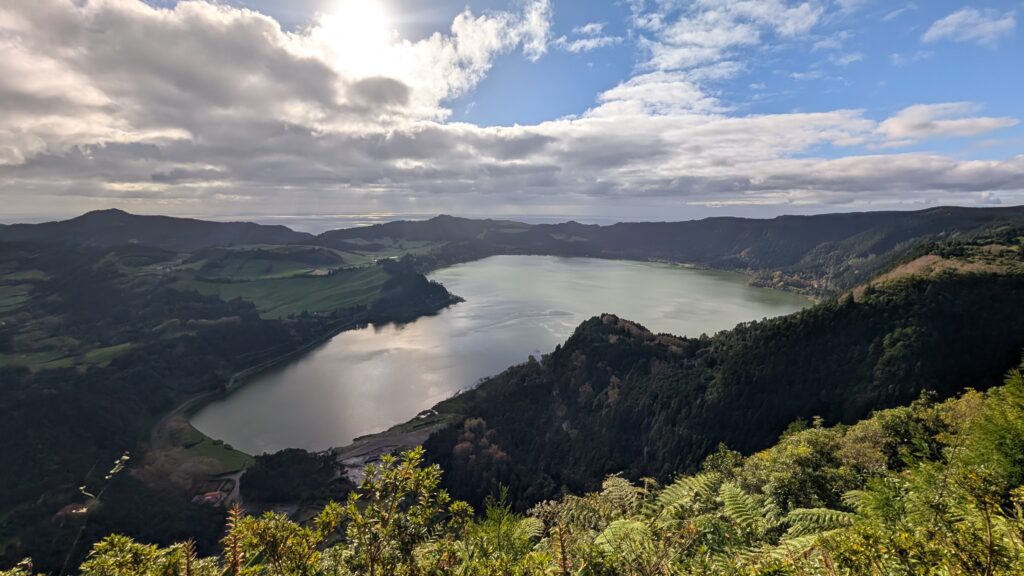
Lagoa do Furnas, the right-hand side of the caldera (from this viewpoint).
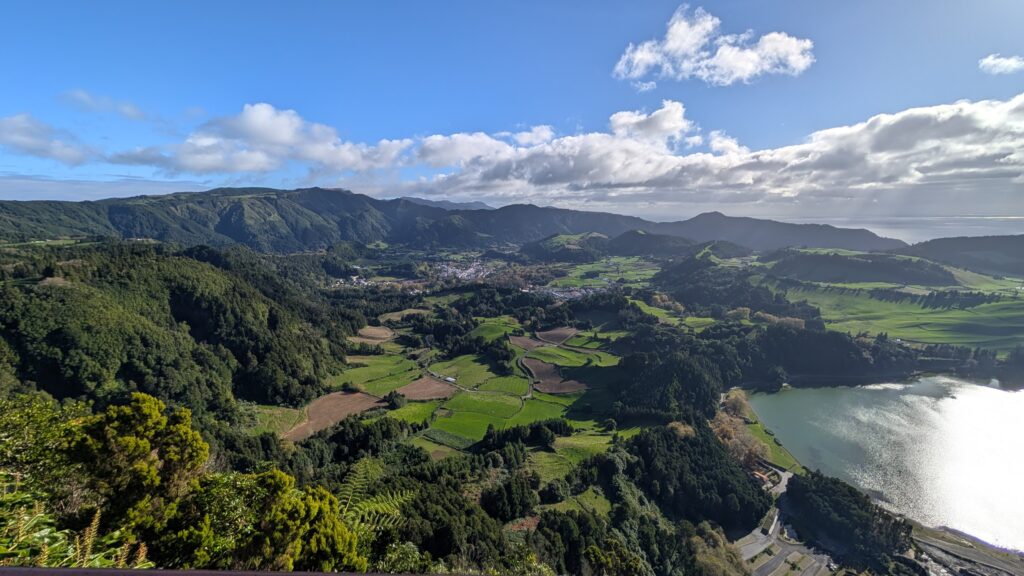
Town of Furnas, the left-hand side of the caldera. Also, did we get lucky with the weather, or what?
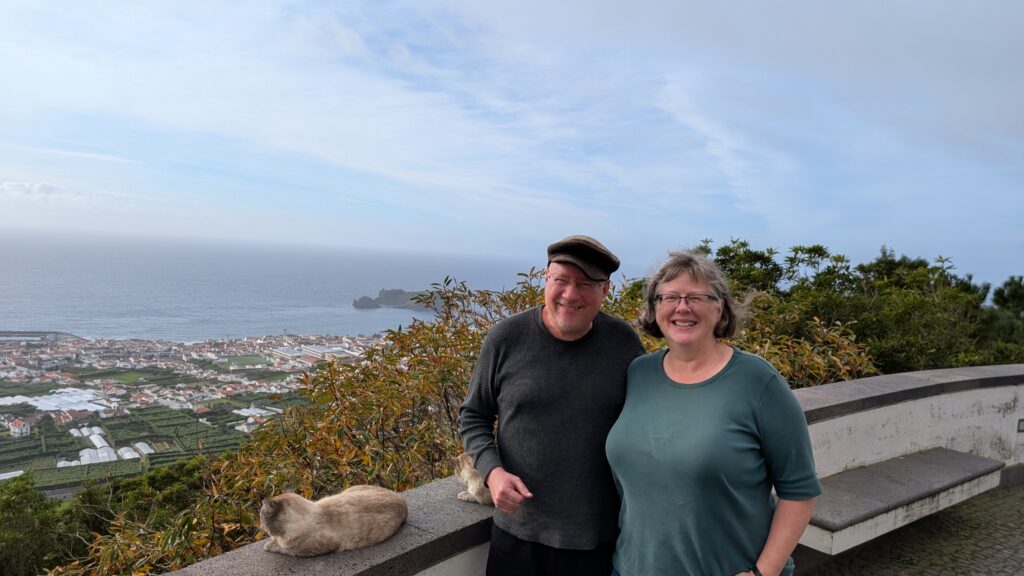
Here’s the viewpoint where we took the Furnas pictures. The cats will be mentioned later.
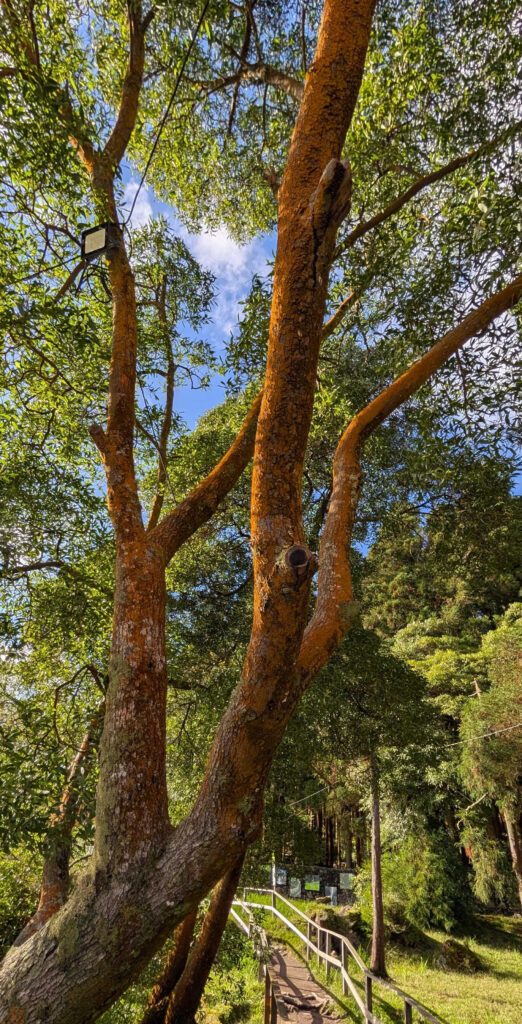
Sulphur-coated trees.
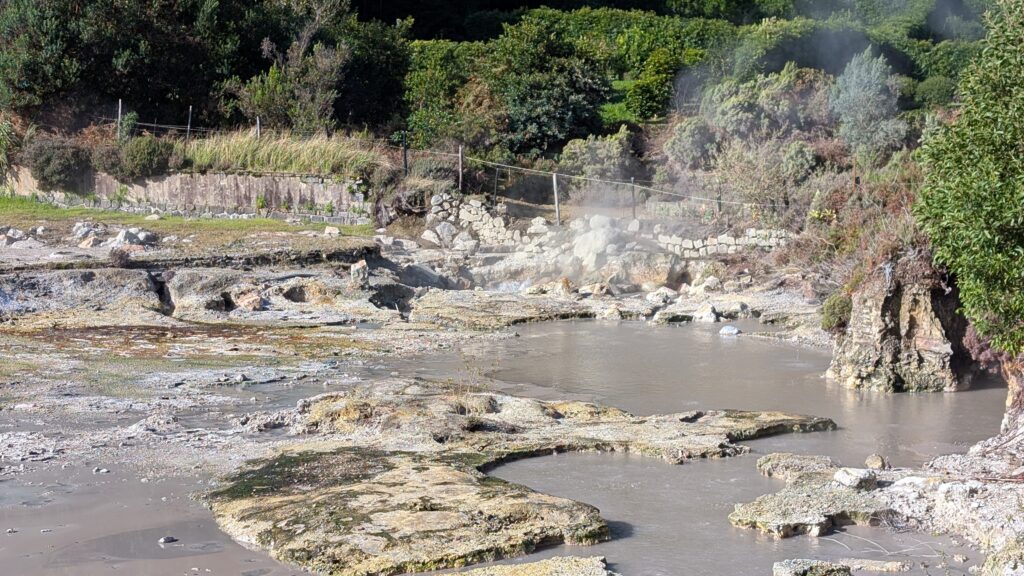
And here’s why the trees are coated in sulphur. Can you see the steam on the right?
There are several restaurants in Furnas dedicated to cooking a traditional Azorean stew known as cozido in the steam of the volcano. Our first tour included this lunch, and I just have to say, I wish someone had told me how much food it was going to be so I could’ve eaten a lighter breakfast.
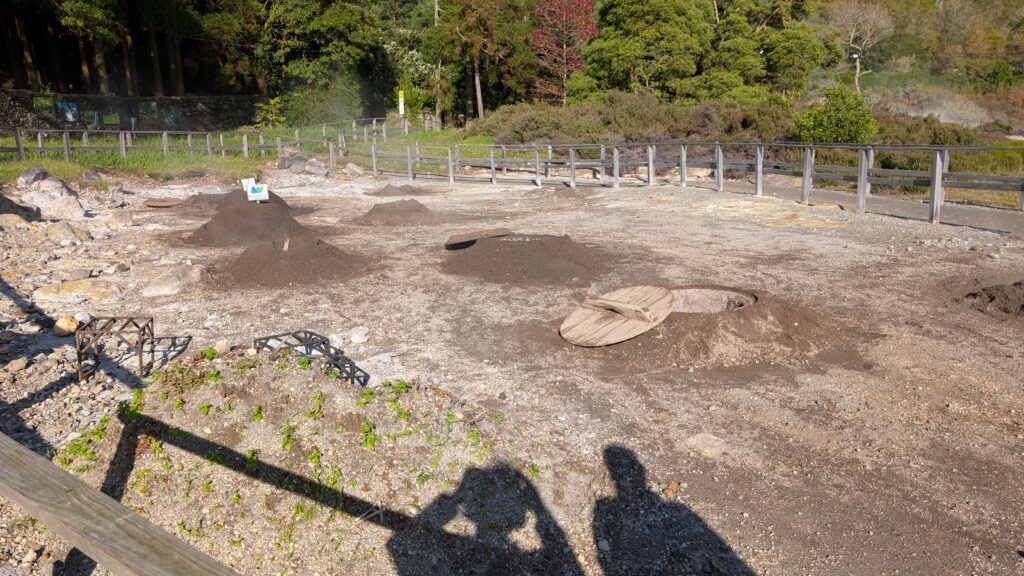
Here’s the “cozido field.” Each of these pits is owned by a different restaurant.
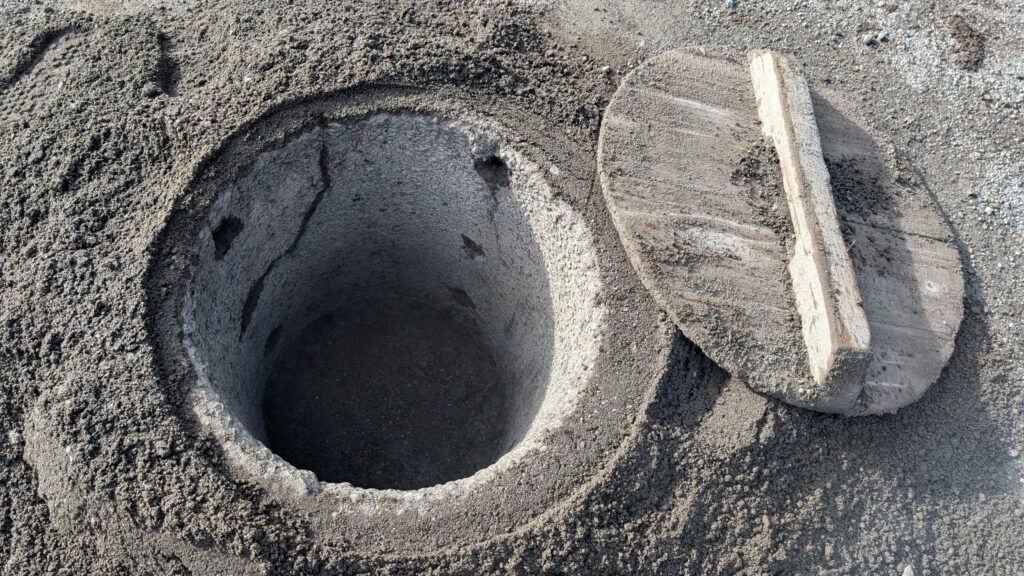
Closeup. Our lunch was in there. It’s about 140F at the bottom.
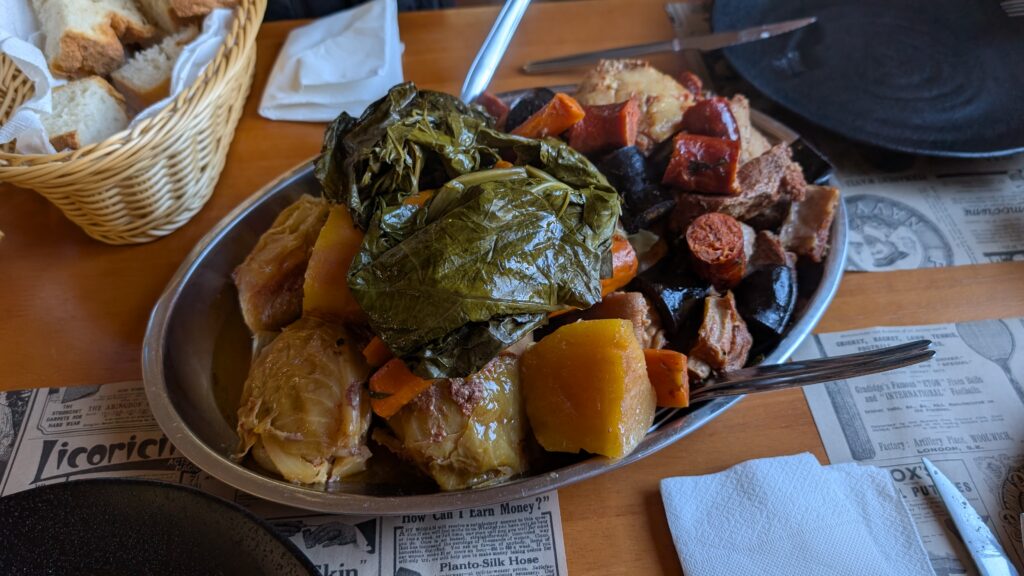
Lunch!
There is both chorizo and blood sausage, chicken, pork and beef, two kinds of potato plus yams, two kinds of cabbage, carrots, … all tender and flavorful with the steaming, and way too much for two people. Argh! If you’re ever on one of these tours, don’t make this mistake, come hungry.
Okay, I need to talk about the cats. I especially admire this one intrepid fellow who ignored the fence and is laying on warm soil near a steam vent:
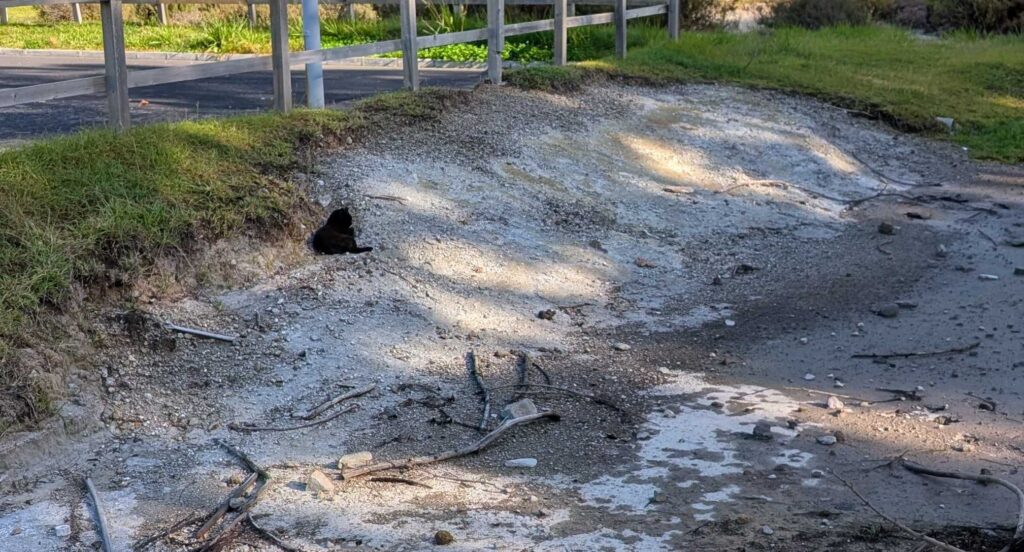
From your computer keyboard to a volcanic steam vent, they always manage to find the warmest spots, don’t they?
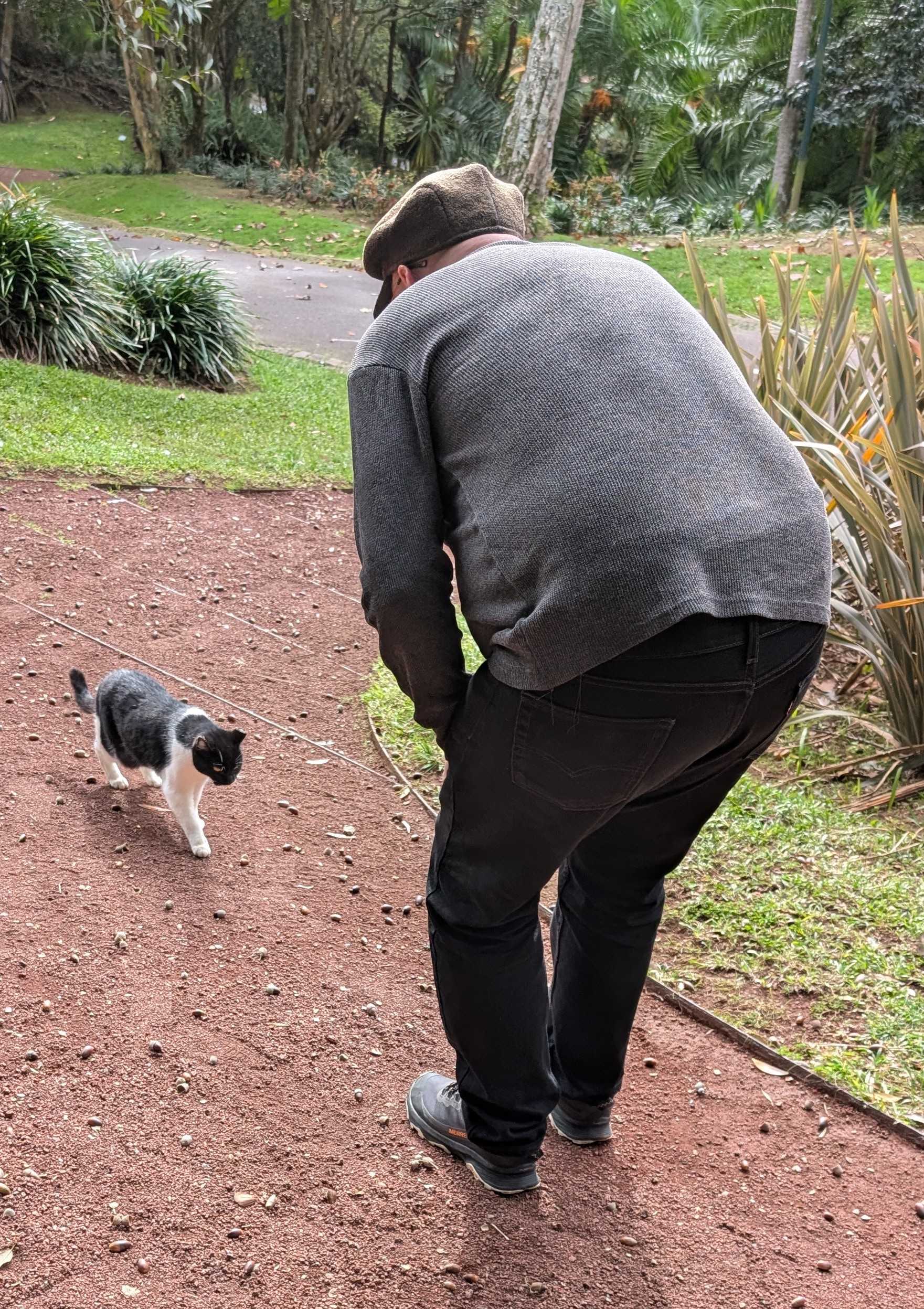
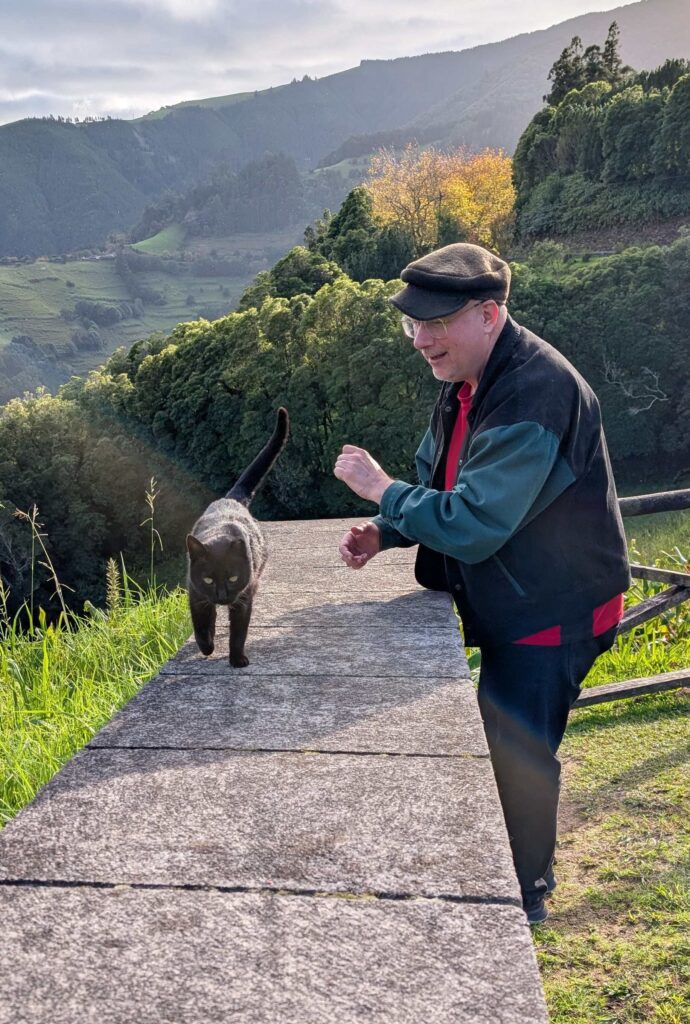
There were cats everywhere on these tours. A friendly kitty came up to us at our first stop, and according to the guide the Azorean government runs a program where they catch feral cats and neuter them, then let them go. In the pictures, if you notice that the cats have the tip of one ear clipped, that means the cat is neutered. As well, the government actually feeds the cats! Which means they are not dangerous and temperamental, they like humans, and come up to you for pets and scritches wherever you go. Marty was in absolute heaven, he adores cats and we’ve always regretted that we can’t have one due to my allergies. Here’s a series of cat encounters over the week:
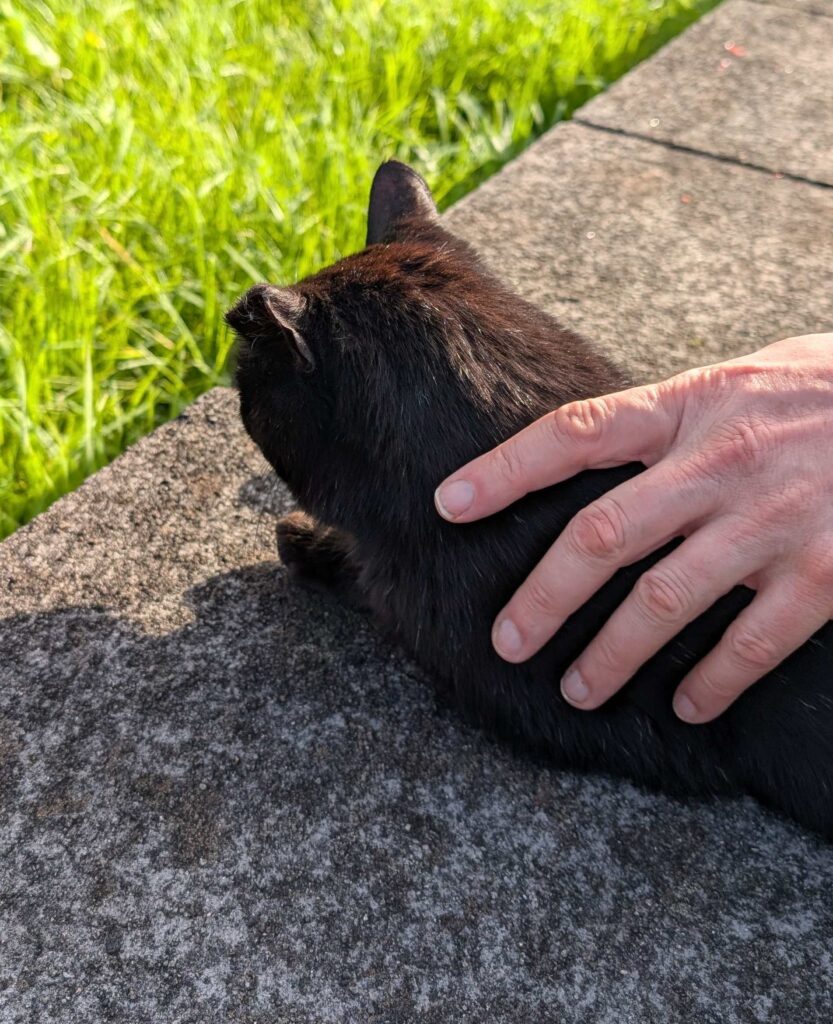
Here’s a closeup of a clipped ear, meaning this cat has been neutered.
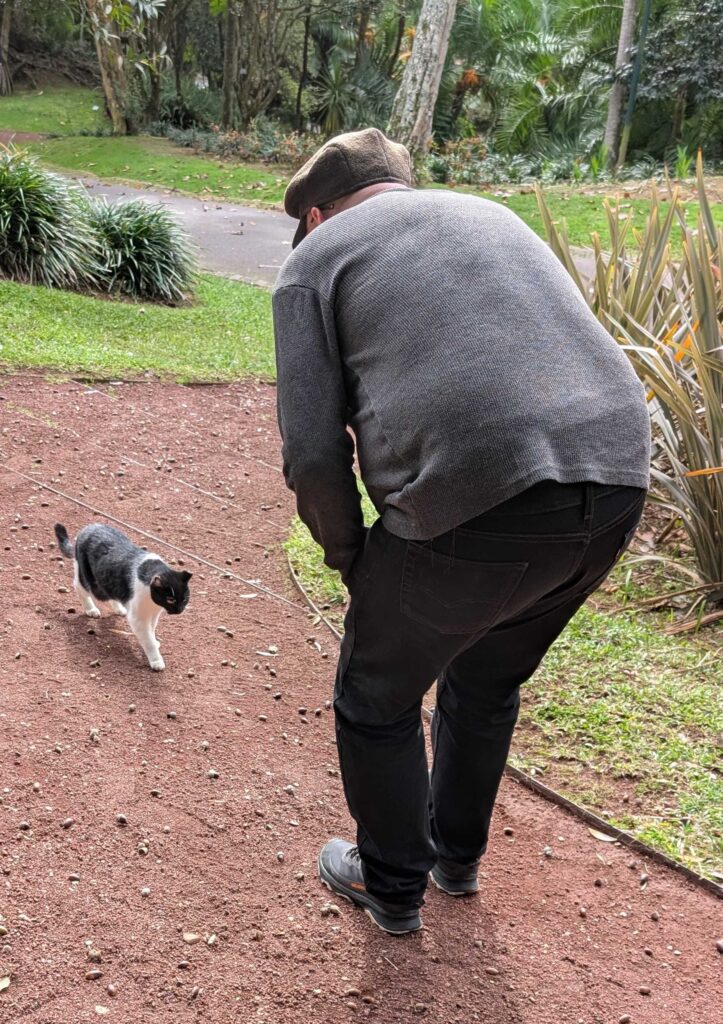
Marty the Cat Whisperer, making feline friends wherever he goes.
Back to Furnas. Both tours took us to the Nativity area, because when you live in a steaming hellscape and it’s the Christmas season, what else are you going to do but put up Nativity scenes?
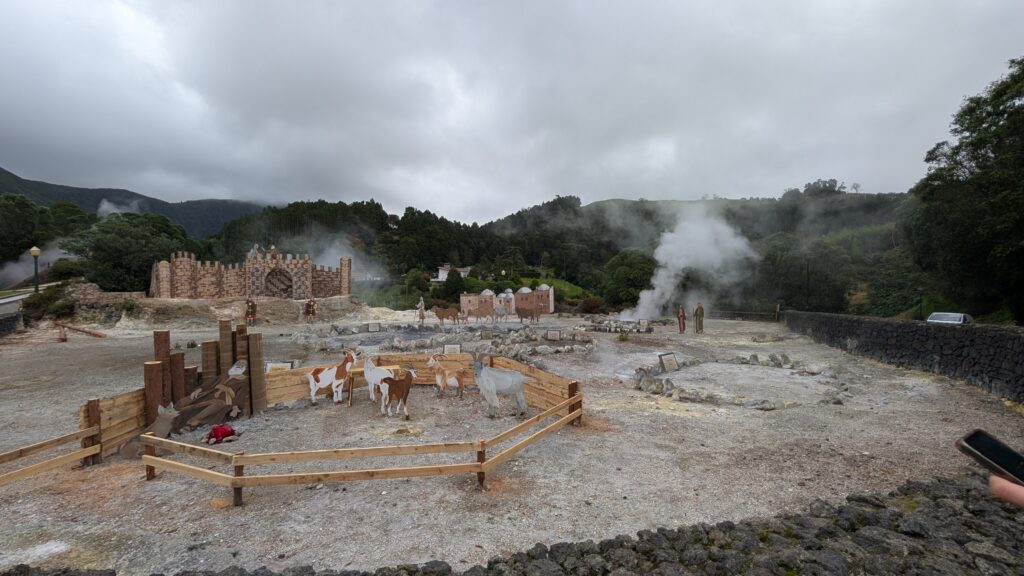
And the hellscape part is somewhat literal, as this caldera is named for a famous demon, Asmodeus, from “Paradise Lost” and Catholic/Jewish tradition:
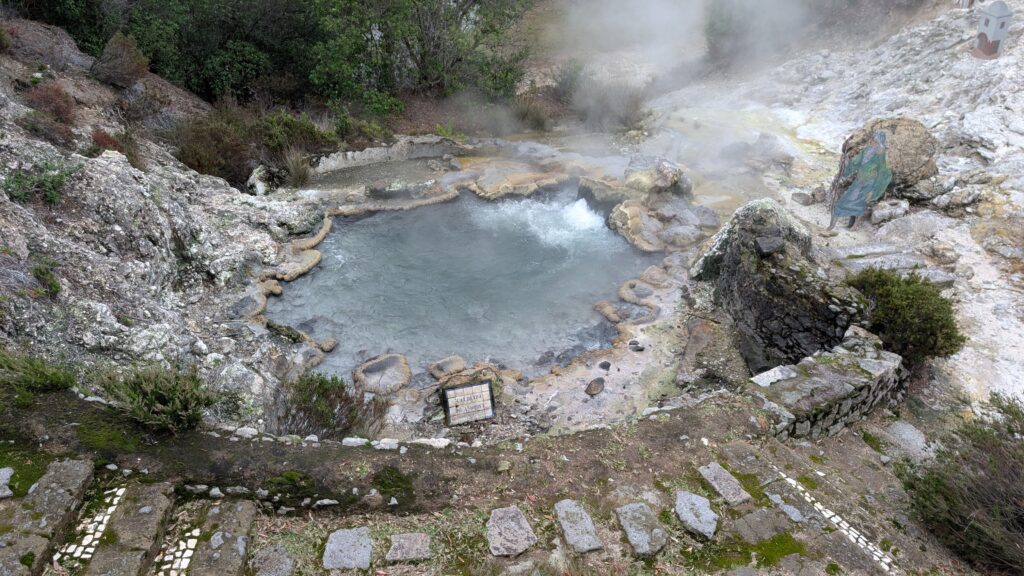
Caldera do Asmodeus – Ya gotta love the shepherd on the right, just casually overlooking the whole portal to hell mileu.
The other thing we were here to do was drink the water. The steam pools area around the Nativities have multiple taps, each listing the temperature of the water. This caldera water is safe to drink, warm (15 to 25C), naturally bubbly, and each tap has a slightly different taste, not really sulphurous (thank the stars). It actually tasted quite good, and now we can add volcano water to the list of unusual things we’ve eaten and drank.
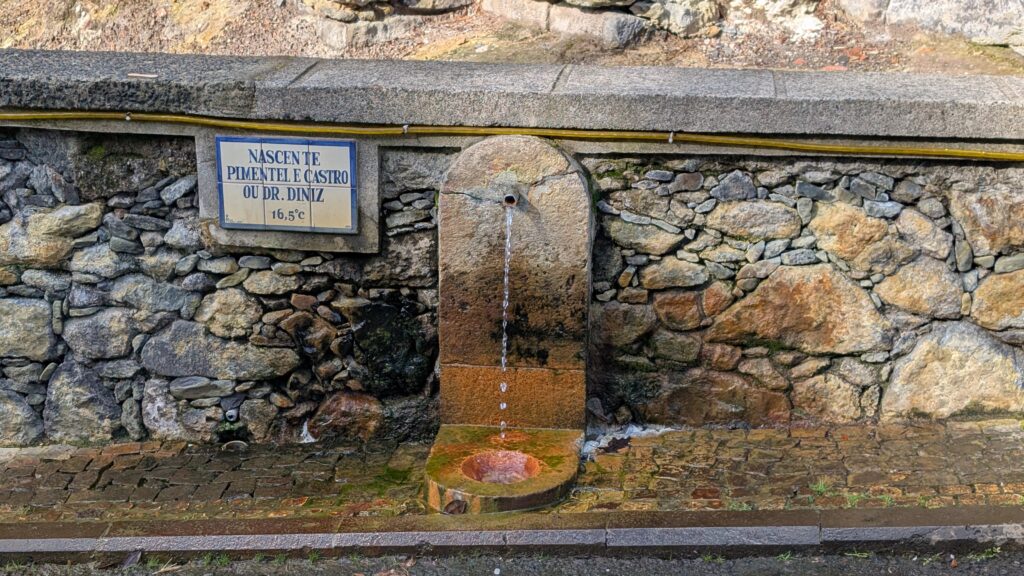
The buildup of minerals in the bowl is probably a turnoff to a lot of people. Lucky we have Chemistry degrees.
So Furnas was the centerpiece of both tours, and in one of them, also the lunch stop. But then we went on to view several places along the craggy eastern coast of San Miguel Island. Close to Furnas is Povoação, which is where Portuguese settlers first landed on San Miguel Island back in the 15th century. “Povoação” literally means “settlement,” so the people who landed there displayed the deep poetic instinct often found among place names (all those River Avons in Britain, anyone?) There is a monument called the Portas do Descobrimento (Discovery Gates) that marks this historic landing site.
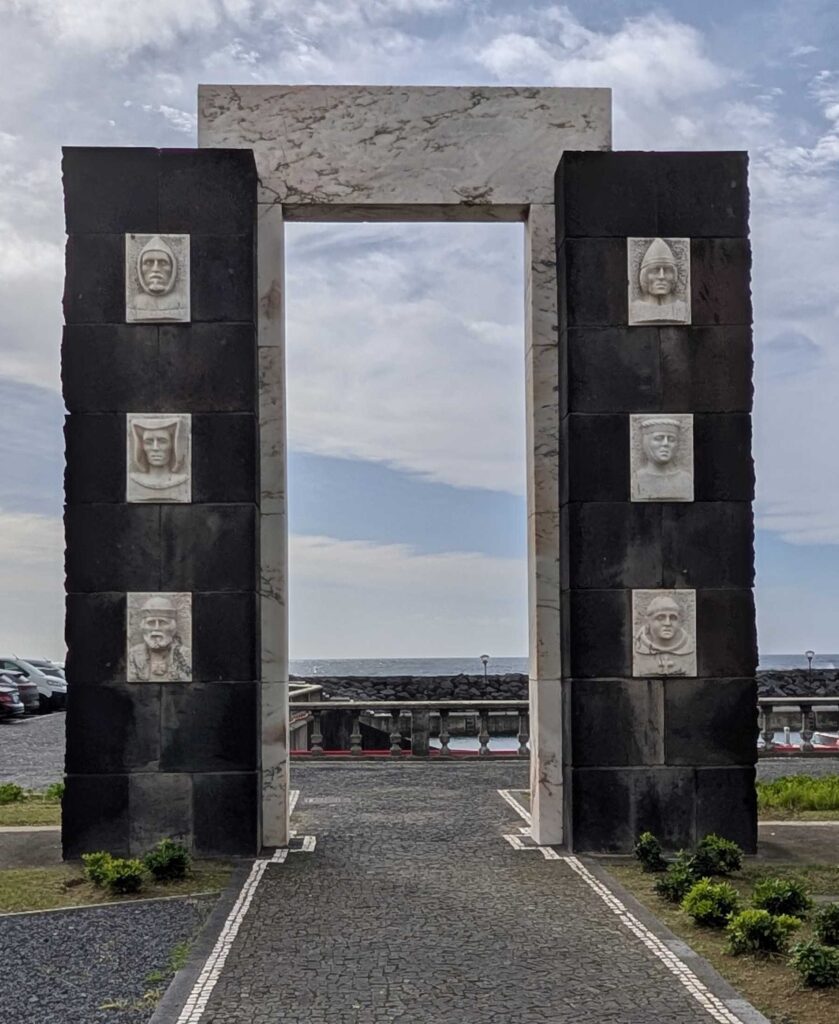
Now, the story is that there wasn’t anyone here and the island was uninhabited. And a cursory round of Internet searching supports that, and the island is an active volcano. However, some recent research suggests that the Vikings may have settled the place briefly prior to the 15th century. Some of the evidence involves mouse DNA, leading to this amazing research paper title: “Viking mice: Norse discovered Azores 700 years before Portuguese.” What I wouldn’t give to have that paper in my resume, if I was still a researcher.
On both tours we finished up with some botanical garden visits, but one of the tours took an exciting way to get there. Our second jaunt was a 4×4 Jeep excursion, and the guide took this opportunity for some overland adventuring. We went up and over the mountains to the eastern coast via a logging road, which was very narrow and rough and wild, and the wind at the top was intense! Marty asked, “This is a one-way road, right?” (Because we have those kinds of logging roads in western Canada.) The guide, rather casually: “Oh no, this is two ways.” Yeeeeeahhhhhh, this road was basically one car wide. Fortunately, it was a grey day in December, and we didn’t encounter anyone.
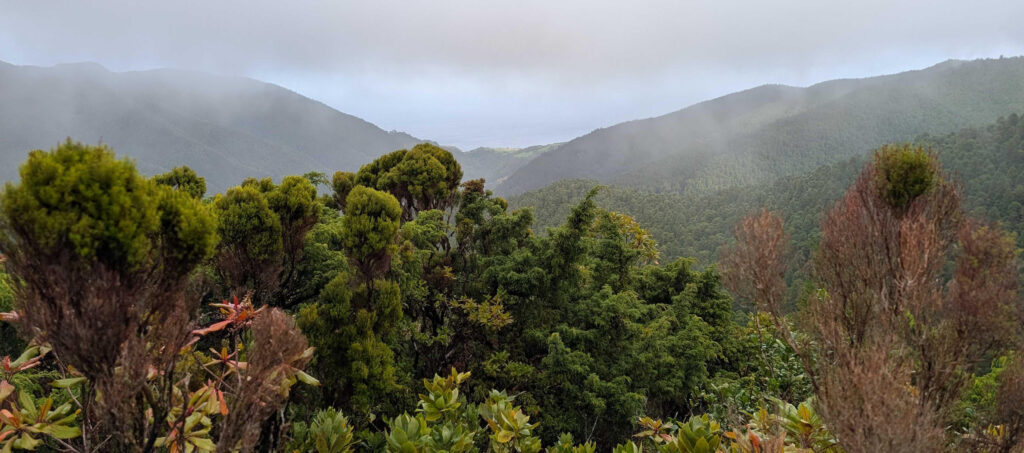
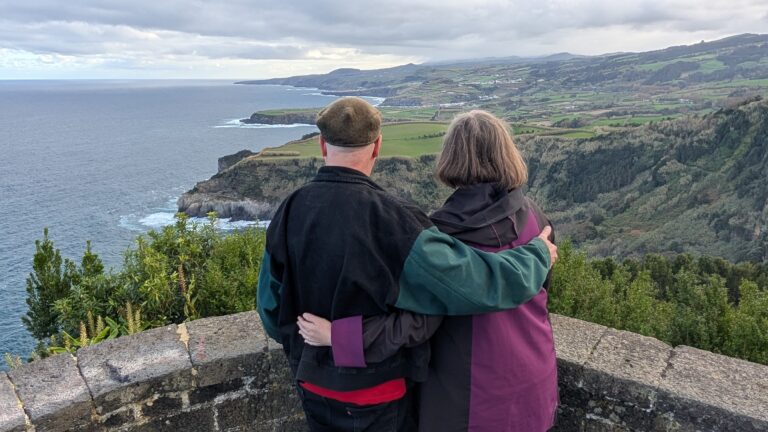
Here we are at a viewpoint at the summit of the road. Sadly it’s very foggy, but you can see the ocean through the gap, giving a sense of how high up we were.
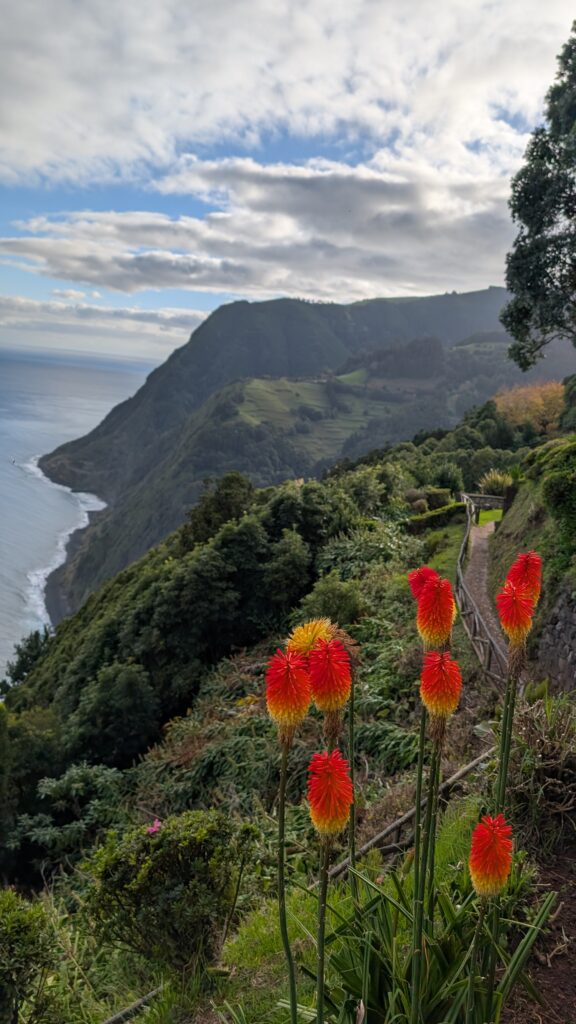
More botanical gardens. I can’t imagine what the flowers are like in season, and I just have to brave the crowds and the tourist prices and come back.
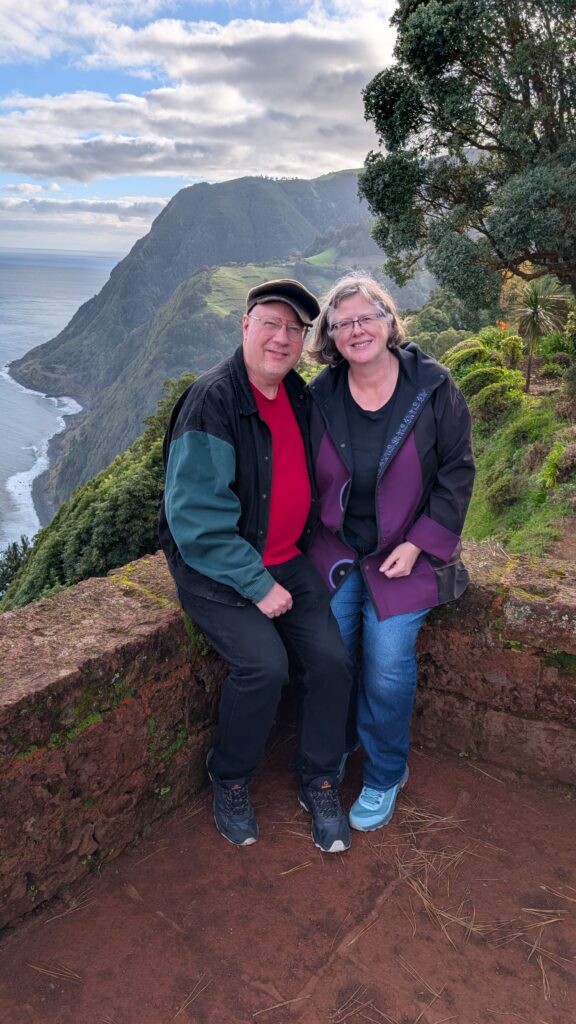
Us! Just to prove I didn’t borrow these images off the Internet.
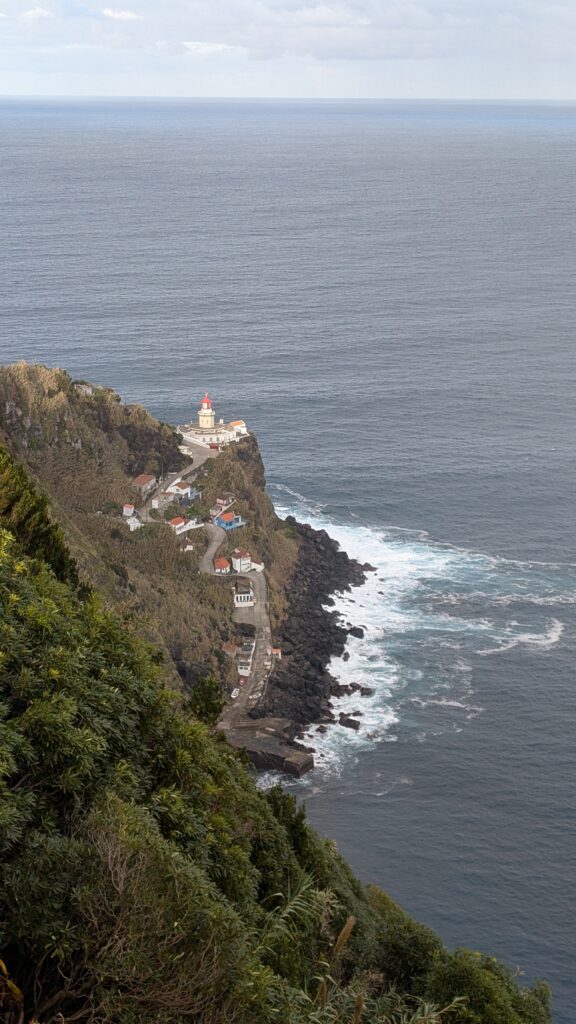
One of the final sights of the tour was the eastern lighthouse. The guide told us it was the tallest lighthouse on the island. Also, the only lighthouse on the island, everything else was just a beacon. Apparently it’s the only structure built to house the light and is up at least 50 feet, so it’s become a bit of a local attraction.
Some final food notes to wrap up this section. After the first tour, the one with the cozido, we were so full we wanted no part of going out for dinner. Luckily there was a bakery open across the street from our drop-off, so we got a couple of items to take back to the room with us. We had saved our eggs from the breakfast basket that morning, so we had a light breakfast for dinner.
On the second tour we didn’t do another volcanic cozido (good choice, I think that’s a once-in-a-while experience). Instead our guide took us to Restaurante Casa De Pasto O Cardoso, in Lomba da Fazenda, a name which I’m writing out in full because it was a 5 out of 5. If you’re in the area, you MUST eat here. I had the most amazing steak for lunch, with a side of veg and a good (really good!) glass of wine for about 11 Euros. And if travel is about anything, it’s about great food!